Agronomy Tech Tip: Considerations for Soil Fertility Management


The current agricultural economy, specifically in regions of corn and soybean production, has experienced market volatility, low crop prices, and high fertilizer prices. This scenario has created uncertainty at the farm gate and led farmers to consider input reduction management strategies focused on fertilizer cutbacks.
Below are tables for corn and soybean illustrating yield required to break even to make a profit based on yield level and price (orange=loss, green=profit, white=break-even). Cost of production were obtained from the 2026 Iowa State University Extension Cost of Production publication.
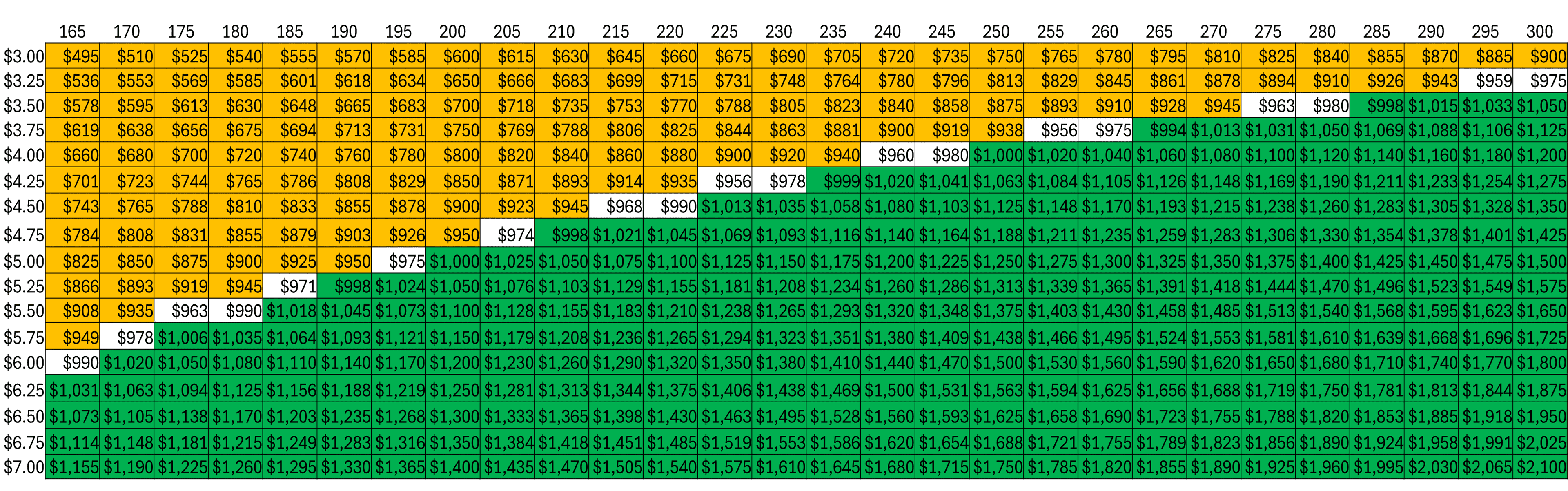

Soil fertility management can be complex and accomplished through numerous strategies. Cost variation is dependent on which strategy a farmer selects and current costs of fertilizer inputs. The US corn and soybean yield for the past several years been several of the highest on record, combined with global volatility in fertilizer supply has created a scenario of low commodity prices and high fertilizer input costs. To combat the current situation, farmers have started considering reducing the total amount of fertilizer being applied—specifically phosphorus (P) and potassium (K)—anytime a farmer is considering reductions in applied fertilizer several factors should be considered including:
Primary management approaches for soil fertilizer can be broken down into four approaches:
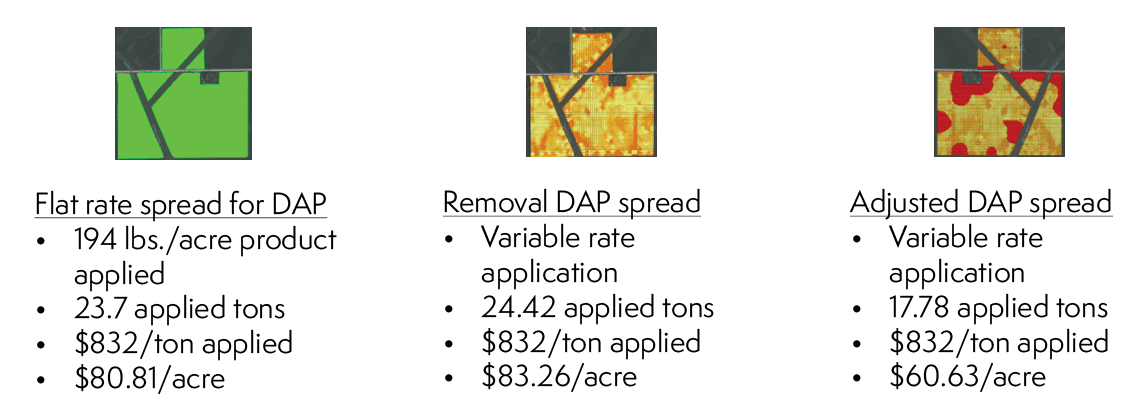
The above examples illustrate several different approaches that can be implemented for managing dry fertilizer applications. The three examples show a comparison of the total tons applied and costs per acre. The adjusted DAP spread was developed by using a yield replacement application but spreading no DAP where phosphorus scores were at or above 28 PPM (Mehlich-3). Developing or hybridizing fertilizer management approaches field-by-field can help reduce fertility costs while minimizing the potential for future soil nutrient deficiencies.
Reducing or eliminating P & K applications may lower input costs in the short term, with little impact for one to two seasons; however, the nutrients removed by the crop must eventually be replaced and is often more costly than expected. To help offset the potential for nutrient deficiencies farmers should consider using products to help minimize potential risk when possible. AcreEdge products like SoilNXT can help make nutrients more available while CropLiftTM can help reduce stress in the growing crop allowing for improved nutrient use efficiency.