What SkyScout Data Reveal About Wet Spring Conditions


Fields, and even parts of fields, that hold more moisture consistently see a stronger V5 fungicide benefit. Low-lying areas with the most water retention showed the highest response (up to +27.2 bu/ac), while drier, upland positions saw a smaller, but still meaningful, gain.
That same trend shows up across environments. When planting conditions were wet, yield response more than doubled compared to dry conditions, regardless of temperature, highlighting moisture as the primary driver of early-season stress and disease pressure.
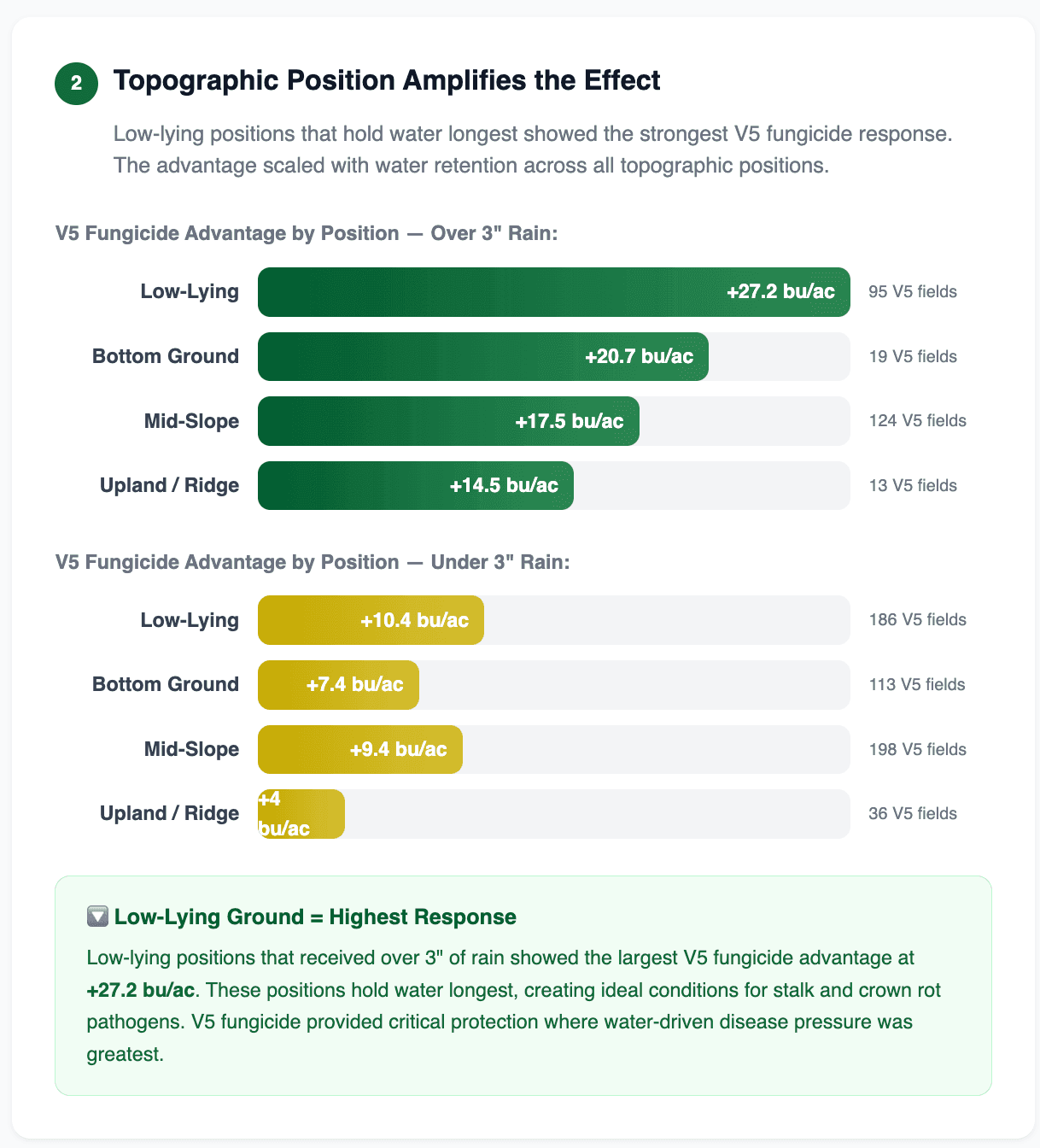
V5 fungicide response increases with water retention. Low-lying areas that stay wet longest show the highest yield advantage, confirming a strong correlation between moisture and disease-driven stress.
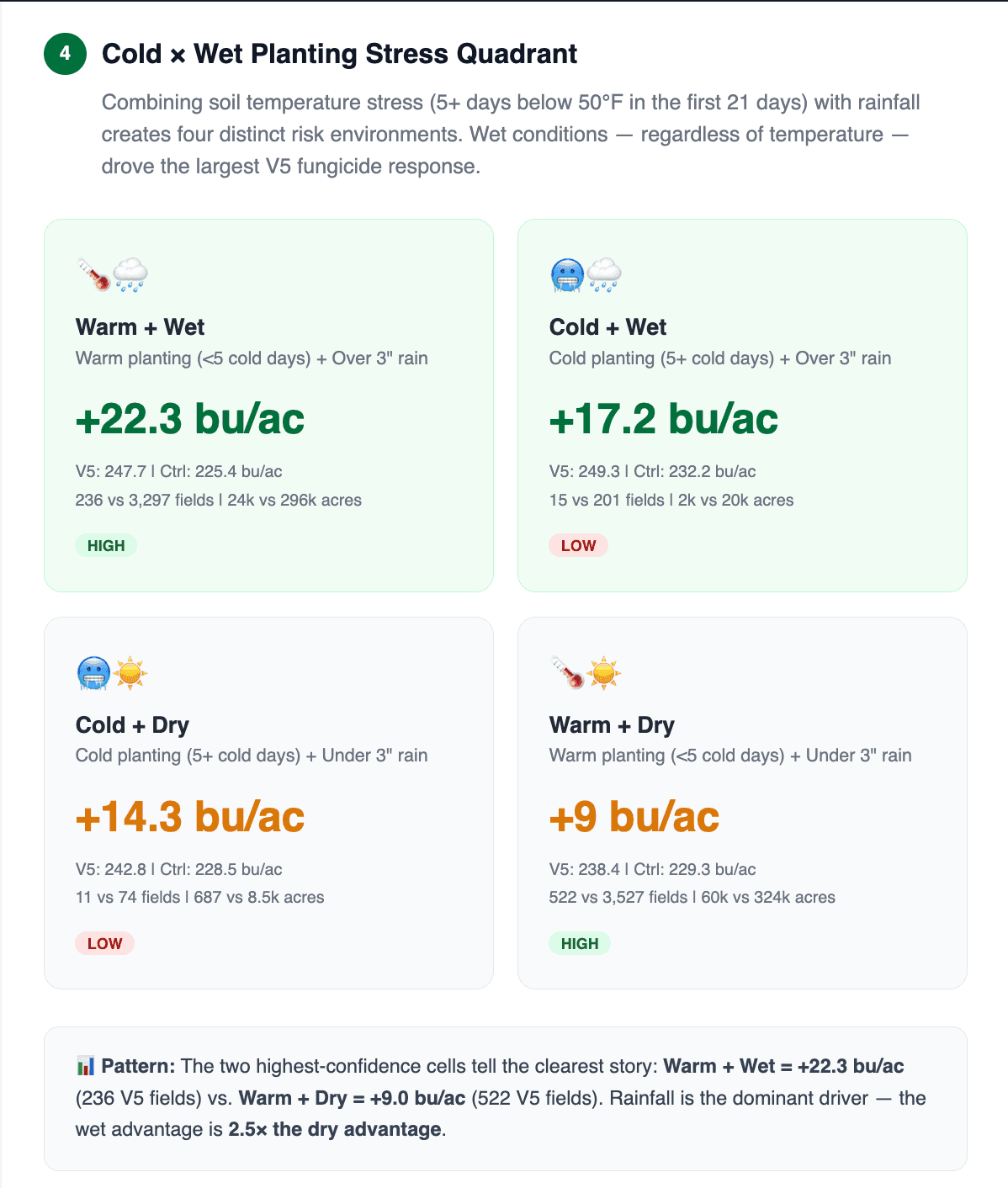
Moisture—not temperature—is the dominant factor. Wet planting conditions delivered over 2.5x greater yield response than dry conditions, emphasizing the impact of excess moisture on early-season crop stress.
Contact your Landus Representative today to get started with SkyScout or contact us here.
Learn more about these factors in our new podcast, Too Wet to Plant? What This Spring Means for Your Crop, featuring Dan Bjorklund and Jaci Winkelpleck here.